

From Play to Purpose: Our Early Years Philosophy
- mutendimontessori
- Mar 26
- 2 min read

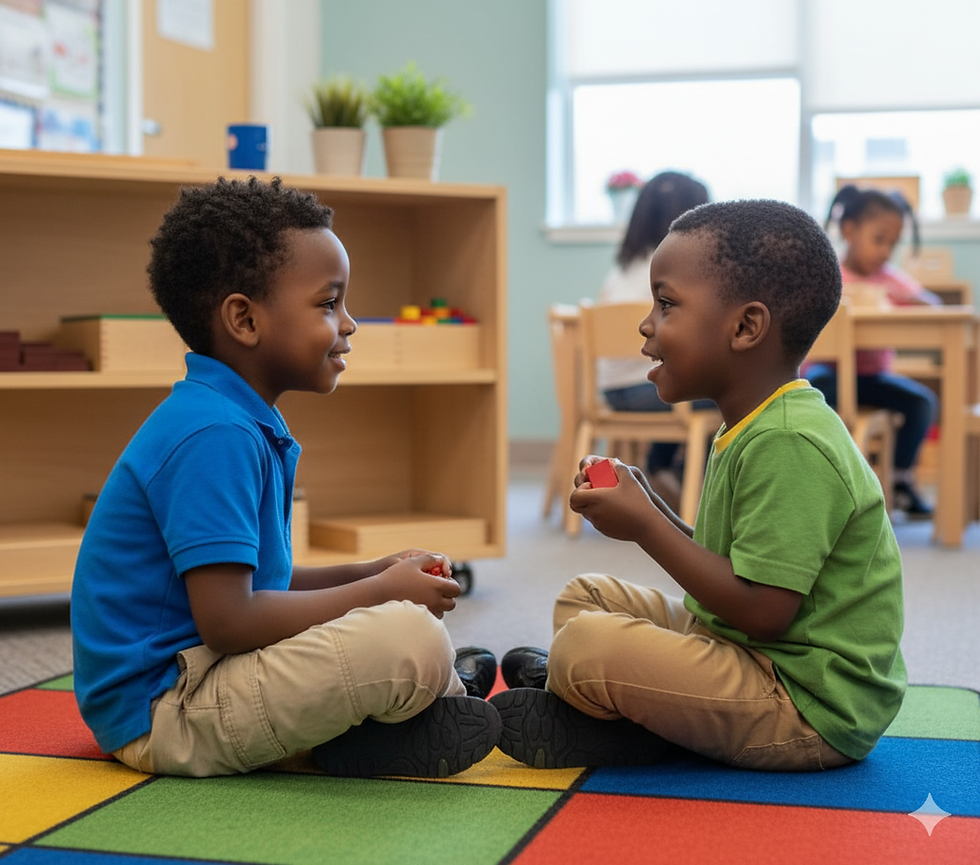
When parents visit an Early Years classroom, one of the first things they often say is:
“It looks like the children are just playing.”
And in a way, they are.
But what may appear to be simple play is actually something far more powerful, purposeful learning carefully designed around how young children develop.
At Mutendi Montessori – Nyeredzi Ridge Campus, our Early Years philosophy is built on a simple belief:
The work of childhood is exploration.
And when that exploration is guided well, play becomes purpose.
Why Early Childhood Matters More Than We Realise
Between the ages of three and six, a child’s brain is developing at an extraordinary pace. During this period, children are absorbing language, social behaviours, coordination, and emotional understanding almost effortlessly.
These early years shape how children will approach learning for the rest of their lives.
Do they feel capable?
Are they curious?Do they believe mistakes are part of learning?
Our Early Years environment is designed to nurture these foundations intentionally.
What Looks Like Play Is Actually Preparation
In a Montessori classroom, activities are carefully chosen to support specific areas of development.
When a child pours water between small pitchers, they are not simply playing with water. They are developing coordination, concentration, and independence.
When a child traces sandpaper letters, they are preparing the hand and mind for writing.
When children sort objects by colour, shape, or size, they are building the logical foundations for mathematics.
Every activity serves a developmental purpose.
This is why Montessori environments are often called “prepared environments.” Nothing is accidental. Everything supports the child’s growth.
Independence Begins Early
One of the most powerful outcomes of Montessori Early Years education is independence.
Children learn to:
Choose their own work
Care for classroom materials
Prepare simple snacks
Resolve small problems
These experiences may seem small, but they build something profound:
self-belief.
A child who learns to tie their shoes, pour their own drink, and complete a task independently begins to see themselves as capable.
And confident children approach learning differently.
A Calm Environment for Deep Learning
Young children thrive in environments that balance freedom with structure.
In our classrooms, you will not find constant instructions or rushed transitions. Instead, children move through their work with focus and purpose, guided gently by trained Montessori educators.
This calm atmosphere supports concentration — a skill that will later support reading, mathematics, and academic study.
The ability to focus deeply does not appear suddenly in Primary School.It is built slowly in the Early Years.
Building the Foundations for the Future
Our Early Years philosophy is not about rushing children into academics.
It is about preparing the mind for the learning that will follow.
By the time children move into Primary, they already possess:
Strong concentration
Curiosity about the world
Respect for their environment
Confidence in their abilities
These qualities allow academic learning to flourish naturally.
Because when children are confident, curious, and capable, learning becomes something they pursue with enthusiasm — not something they endure.
From play to purpose, the Early Years are where that journey begins.
📩 Want to learn how to enrol your child?✉️ admin@mutendimontessori.com or WhatsApp +263 783 341 973🌍 www.mutendimontessori.com | www.chiratidzo.com


Comments