

Inside Our Prepared Environments
- mutendimontessori
- Apr 2
- 3 min read

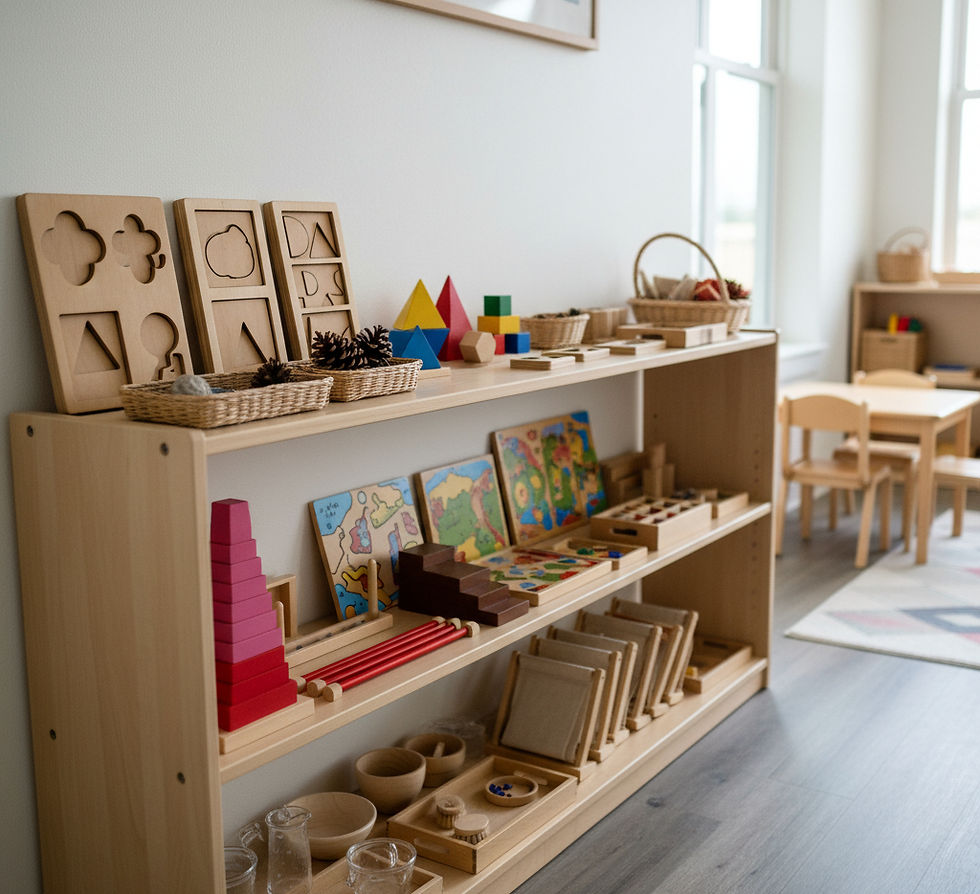
Walk into a Montessori classroom for the first time and you may notice something different immediately.
The room feels calm.Materials are arranged neatly on low shelves.Children move carefully, selecting their work with purpose.
Nothing appears random.
This is what Montessori educators call a prepared environment — a classroom intentionally designed to support how children learn best.
At Mutendi Montessori – Nyeredzi Ridge Campus, every classroom is thoughtfully prepared so that the environment itself becomes a teacher.
What Is a Prepared Environment?
A prepared environment is more than a tidy classroom.
It is a space carefully designed to match the developmental needs of the children within it. Every detail — from the size of the furniture to the arrangement of learning materials — is chosen with intention.
In a Montessori classroom, you will often find:
Low shelves so children can choose materials independently
Hands-on learning tools arranged from simple to complex
Natural light and calm colours that support concentration
Child-sized furniture that encourages independence
Clearly defined work areas where children can focus without distraction
These elements help children feel capable and responsible within their environment.
Instead of relying on constant instructions from adults, the classroom itself quietly guides behaviour and learning.
Materials That Invite Discovery
The materials you see on Montessori shelves are not toys. Each one has been carefully designed to teach a specific concept.
A child may work with:
Practical life materials, such as pouring, polishing, and food preparation
Sensorial materials that refine the senses and develop observation
Language materials that introduce sounds and writing
Mathematics tools that help children physically explore numbers and patterns
Children are free to choose their work, but each material has a clear purpose and a defined way of being used.
This balance of freedom and structure encourages both curiosity and discipline.
The Teacher’s Role in the Environment
In traditional classrooms, the teacher is often the centre of activity — instructing, directing, and correcting.
In Montessori environments, the teacher plays a quieter but equally important role.
Teachers observe carefully. They watch how children interact with materials, how they solve problems, and when they are ready for new challenges.
Instead of interrupting learning, teachers introduce lessons at the right moment, guiding the child gently forward.
This approach allows children to develop independence while still benefiting from expert guidance.
Why the Environment Matters
Children are deeply influenced by their surroundings.
When a classroom is orderly, beautiful, and purposeful, children naturally develop similar qualities in their own behaviour.
They learn to:
Care for shared spaces
Respect materials
Work with concentration
Move thoughtfully within a community
Over time, these habits become part of the child’s character.
A Classroom That Supports Growth
The goal of a prepared environment is simple: to make it possible for children to learn with confidence.
When children can choose meaningful work, move freely, and engage deeply with their surroundings, learning becomes active rather than passive.
At Mutendi Montessori – Nyeredzi Ridge Campus, our classrooms are designed to support every stage of development — from the youngest learners discovering independence to older students exploring complex ideas.
Because when the environment is prepared well, something remarkable happens.
Children begin to prepare themselves for the future.
📩 Want to learn how to enrol your child?✉️ admin@mutendimontessori.com or WhatsApp +263 783 341 973🌍 www.mutendimontessori.com | www.chiratidzo.com


Comments